
Why Putting 20% Down Could Make Sense for Your Next Home
If you’re thinking about buying your next home, you’ve probably heard the old rule: save 20% for your down payment.
The truth is, you don’t necessarily need to. There are plenty of loan options that allow qualified buyers to put down much less. But for many repeat buyers, putting 20% down is still a goal - and often, it becomes possible because of the equity they’ve built in their current home.
So, why put more down if you don’t have to?
There are a few meaningful benefits, especially for homeowners who have built significant equity over the years.
Repeat Buyers Are Putting More Down
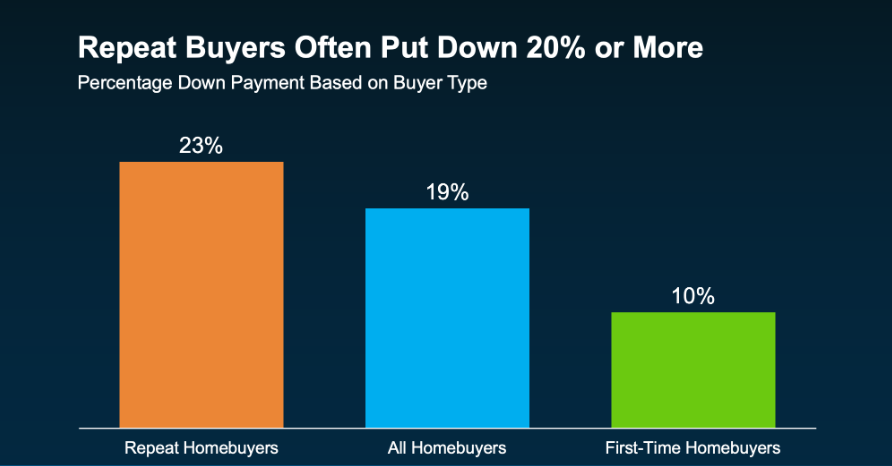
According to the National Association of Realtors (NAR), the typical repeat buyer puts down 23% when purchasing their next home.
That’s more than double the 10% typical first-time buyers put down.
How are repeat buyers able to do it? Often, it comes down to equity.
Over time, homeowners generally pay down their mortgage while their home may also appreciate in value. The difference between what you owe and what your home is worth is your equity - and after several years of ownership, that can become a meaningful source of buying power.
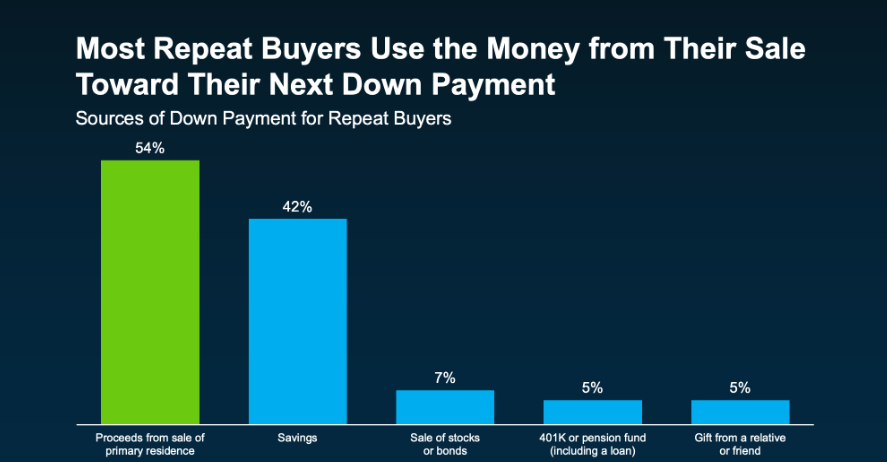
When you sell, that equity can be put toward the purchase of your next home. In fact, NAR data shows that most repeat buyers use the proceeds from their previous home toward their next down payment.
For first-time buyers, that springboard isn’t there yet - and that’s completely normal. But if you already own a home, you may have more buying power than you realize.
4 Benefits of Putting 20% (or More) Down
If you’ve built enough equity to make a larger down payment possible, it may be worth considering. Here are a few potential benefits:
A lower monthly payment. The more you put down, the less you need to borrow. That can make your monthly mortgage payment more manageable, especially with today’s interest rates.
Less interest over time. A smaller loan means you’ll pay interest on a smaller balance over the life of the mortgage, which can reduce your overall borrowing costs.
No private mortgage insurance (PMI). With a conventional loan, putting less than 20% down typically means paying PMI. Reaching the 20% mark can eliminate that additional monthly expense.
A stronger offer. A larger down payment can make your offer more appealing to sellers by showing that your financing is strong and you have more funds invested in the purchase.
It’s About What Makes Sense for You
You don’t need to put 20% down to buy your next home. The right amount depends on your finances, your goals, and how you want to use your cash.
But if you’ve owned your home for several years, your equity may give you an opportunity you didn’t have when you first bought. Before making a move, it’s worth understanding how much equity you have and what that could mean for your next purchase.
At the Price Group, we help homeowners look at the bigger picture - from understanding your home’s current value to exploring what your equity could mean for your next move.
If you’re wondering what your current home could help you achieve next, we’re always happy to start the conversation.