
For many first-time buyers, owning a home can feel like a goal that's always just a little out of reach. Between saving for a down payment, managing everyday expenses, and keeping up with housing costs, it's easy to wonder how long it will take to finally get the keys to your own place.
But buying your first home may be more achievable than you think. A few adjustments to your homebuying plan, like considering a starter home or exploring lower down payment options, could help you get there sooner without waiting until everything feels perfect.
Let's look at two ways to make homeownership feel more within reach and how The Price Group can help you explore your options.
How Long Does It Really Take to Buy a Home?
Before diving into the options, let's talk about breaking even. This is the point when the overall cost of owning a home becomes comparable to what you would have spent renting over the same period. Beyond that point, owning may become more financially advantageous than renting, depending on your circumstances.
According to Zillow, it typically takes about 8.5 years to save for a 20% down payment on a mid-priced home, followed by another 6.2 years for the cost of owning to catch up with renting. That's nearly 15 years in total.
However, this estimate is based on two assumptions: buying a mid-priced home and putting 20% down. Adjusting either of those factors could shorten the timeline, and the actual numbers vary depending on local home prices, rents, and individual finances.
The encouraging part? You may have more flexibility than you realize.
1. Consider Starting With a More Affordable Home
Your first home doesn't have to be your forever home. A starter home can be a practical way to enter the market, begin building equity, and work toward your long-term homeownership goals.
A starter home generally falls within the lower third of home prices in a given market. Depending on the area, it might be a condo, townhome, or smaller or older single-family home.
Choosing a home at a lower price point means you may need less money for your down payment, helping you reach your savings goal sooner.
According to Zillow, it takes an estimated 7.2 years, on average nationwide, to save for a starter home and reach the point where owning costs about the same as renting. That's roughly half the time estimated for a mid-priced home.
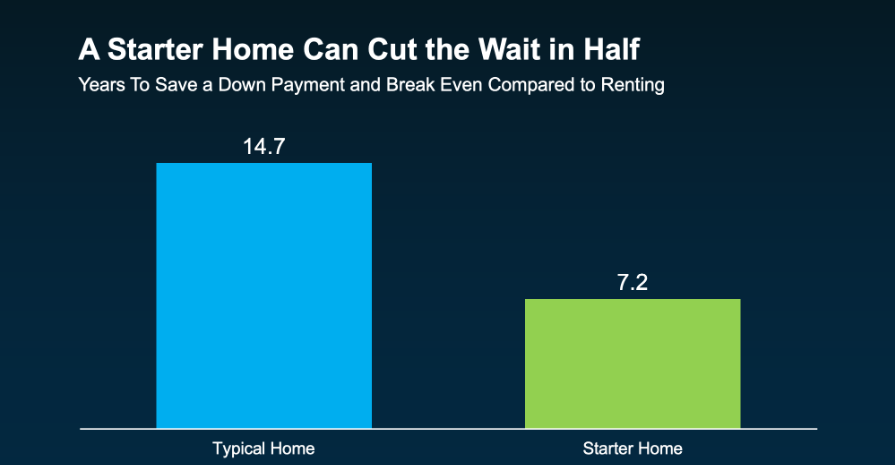
Here's how that breaks down:
About 4.6 years to save for a down payment.
About 2.6 years to break even compared with renting.
Of course, these are national estimates, and your timeline will depend on your local market and financial situation. Still, they show how considering a different price range could bring homeownership closer.
You don't necessarily have to compromise on everything you want, either. Focusing on your must-haves, exploring different property types, and staying open to a home that may need a few updates can help you find an option that fits your budget.
2. You May Not Need a 20% Down Payment
One common misconception among first-time buyers is that you need to save 20% of a home's purchase price before you can buy. In reality, many buyers purchase homes with significantly less down.
According to the National Association of Realtors, the median down payment for first-time homebuyers is 10%.
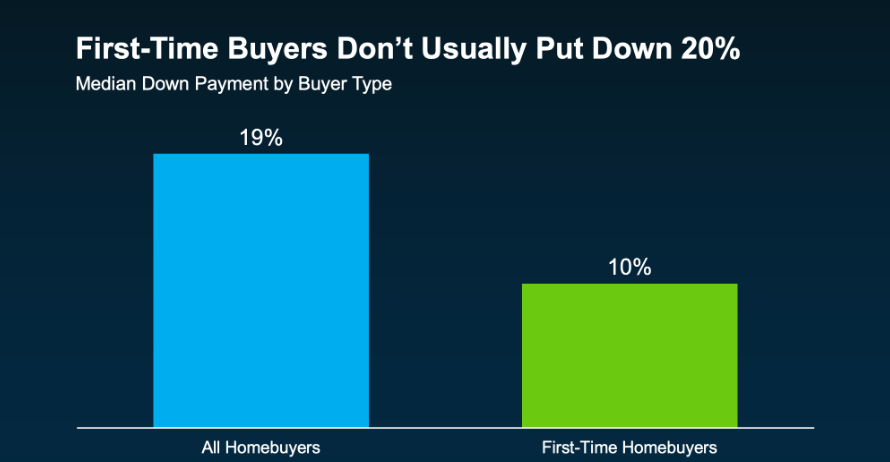
Depending on your eligibility and loan program, some buyers may qualify for down payments as low as:
3% for certain conventional loans.
3.5% for FHA loans.
0% for eligible VA loans and certain USDA loan programs.
A smaller down payment can help you enter the market sooner instead of waiting years to reach the 20% mark. Keep in mind that putting less down may mean private mortgage insurance or other costs, depending on the loan. It's important to understand the full monthly payment before deciding which option works best for you.
There may also be assistance programs that can help with upfront expenses. Down Payment Resource has identified thousands of homebuyer assistance programs across the country, and some eligible buyers may be able to combine multiple sources of assistance.
The programs, requirements, and available amounts vary, so it's worth exploring what may be available in your area with a qualified mortgage professional.
When you combine a home at a comfortable price point with a down payment option that fits your financial situation, buying your first home may become more realistic than you expected.
Find a Homebuying Plan That Works for You
Buying your first home doesn't have to mean waiting until you've saved a large down payment or can afford a home with every feature on your wish list.
Starting with a more affordable property and exploring loan options that require less money upfront may help shorten your path to homeownership. The key is finding a balance between getting into the market and making sure the home, monthly payment, and ongoing expenses fit your budget.
At the Price Group, we help buyers navigate the home search, understand their options, and identify properties that align with their goals. We can help you explore starter homes, compare neighborhoods, and find opportunities you may not have considered.
Wondering whether you're closer to buying than you think? Let's talk about what you're looking for, what matters most to you, and how we can help you take the next step toward your first home.